'%20fill='%232E1091'/%3e%3c/svg%3e)
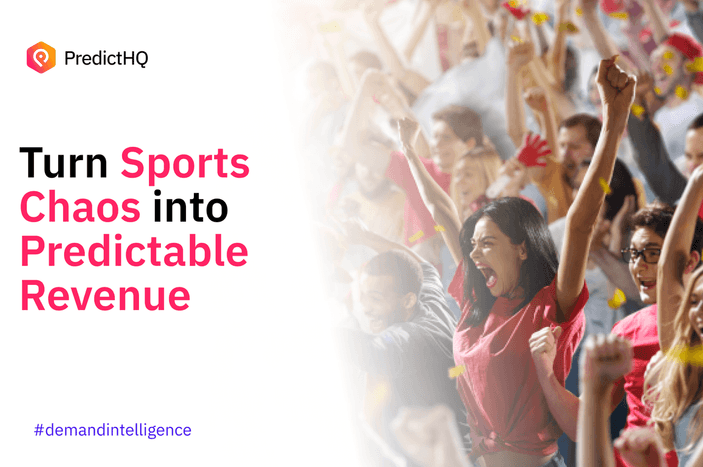
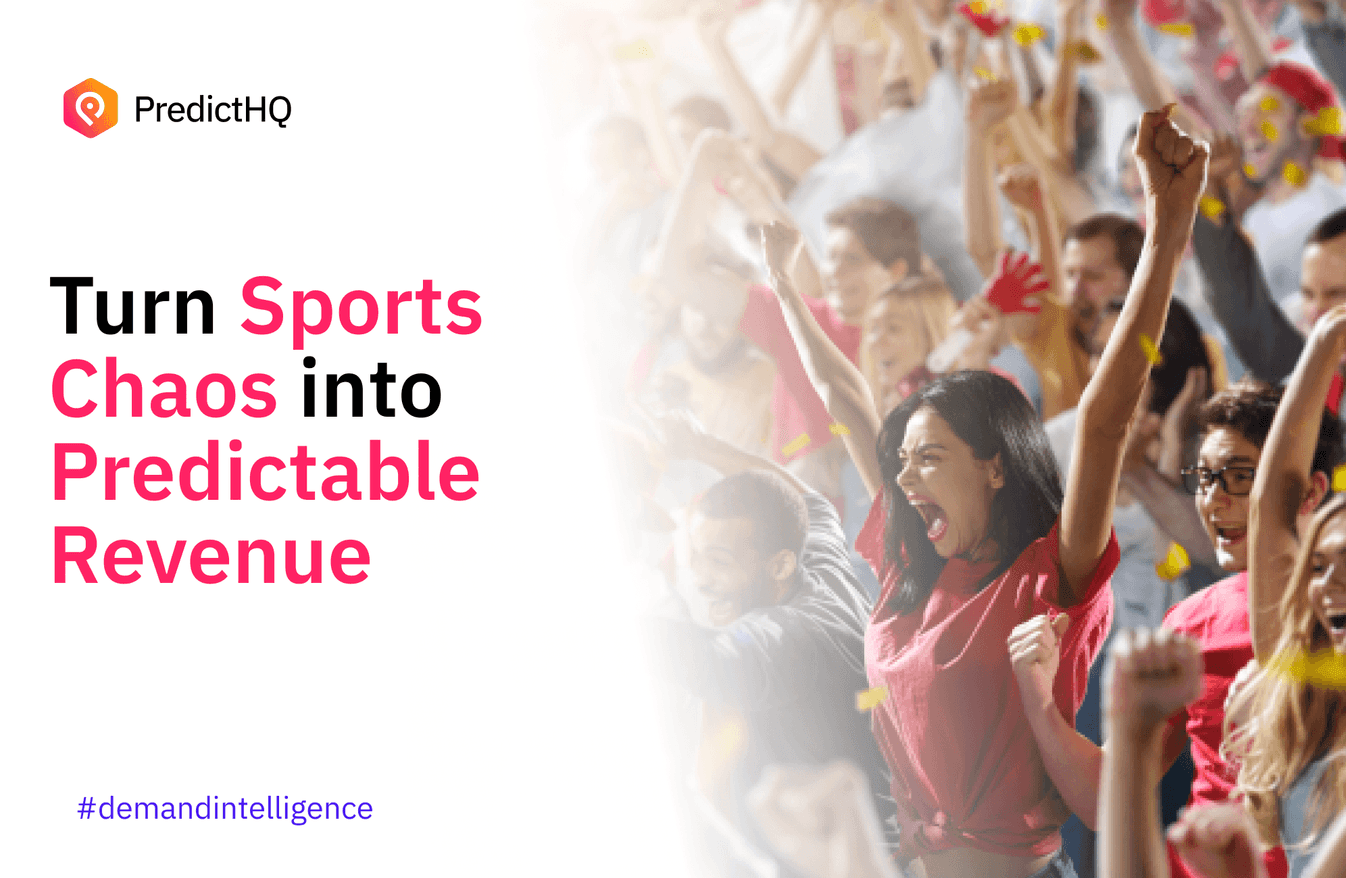
Stop Guessing Game Day: How QSR Leaders Use Demand Intelligence to Turn Sports Chaos into Predictable Revenue

Share
'%3e%3cpath%20fill='%23ACA8BC'%20d='M13.714%2010.623%2020.416%203H18.83l-5.822%206.617L8.36%203H3l7.028%2010.008L3%2021h1.588l6.144-6.99L15.64%2021H21M5.16%204.171H7.6l11.227%2015.715h-2.44'/%3e%3c/g%3e%3cdefs%3e%3cclipPath%20id='clip0_1_4'%3e%3cpath%20fill='%23fff'%20d='M0%200h24v24H0z'/%3e%3c/clipPath%3e%3c/defs%3e%3c/svg%3e)
For the modern Quick Service Restaurant (QSR) operator, the sports calendar creates constant uncertainty when it comes to predicting demand. You know the Super Bowl is coming, and you know the local college football team plays on Saturdays. Historical data tells you what happened last year but it doesn’t tell you that a rescheduled midweek rivalry game, a breakout local marathon, or a surge in youth sports tournaments is about to send 20,000 hungry fans directly toward your storefront.
The cost of this reactivity results in missed sales, the burnout tax on your staff, and the ghost demand that haunts your inventory. Proper planning using demand intelligence can help you prepare properly to capture revenue in your QSR and uphold high customer satisfaction. And it helps you avoid situations where you might be understaffed.
The Problem: The Hidden Costs of Being Reactive
Operations and product leadership in the QSR space face a constant battle against volatility driven by live events and shifting sports schedules. Traditional planning methods often fail to capture the nuances of live events, leading to significant operational friction:
Last-Minute Chaos: Schedules change constantly, and postponements are rarely captured when teams try to track events manually.
The Relevancy Gap: It’s difficult to understand which specific events actually drive demand or change customer behavior for your company.
Inventory Mismanagement: Without accurate predictions on attendance and timing, restaurants either over order and waste food or under-prepare and miss revenue during demand spikes.
Data-Heavy Reality: Sports Live Beyond the Stadium Walls
Sports marketing is no longer just about the fans in the stands. It’s about the viewership clusters and the local impact zones that traditional historical models miss entirely. You’ll want to pay attention to what’s happening on the ground:
The “Second Stadium” Effect: For every fan sitting in a stadium seat, there are thousands more gathering at local watch zones, sports bars, and QSRs to catch the action. This creates significant spikes in order volume, foot traffic, and delivery demand around game time, turning nearby restaurants into high pressure, high revenue environments.
Micro-Moments, Mega Demand: Everyone talks about the Super Bowl, but the real revenue comes from volume. With 5,000+ NCAA football games and over 26,000 soccer matches each year, these smaller events create consistent spikes in transactions, delivery orders, and in store traffic that add up to significant revenue over time.
The Running Revolution: There are over 8,000 major running events globally every year, each creating localized surges in foot traffic and post event demand. These events drive predictable spikes in group orders, walk ins, and family traffic that are often missed by traditional marketing and forecasting approaches.
How Industry Leaders Are Crushing the Competition
The smartest brands in the game aren’t guessing anymore. They’re using predictive demand data to turn sports chaos into a predictable revenue machine:
1. Global Pizza Co: Maximizing NFL Brand Impact
A major global pizza chain doesn’t just sponsor the NFL; they focus on maximizing brand impact by aligning their operations with the league calendar. By understanding the specific cultural moments leading up to the Super Bowl, they ensure they are responding at the speed of culture moving from simple sponsorship to deep operational integration.
2. Large Wings and Delivery Co’s: Predictive Staffing and Inventory
Leading players in the chicken wing and delivery categories leverage sports demand data to predict order spikes specifically during games. While NFL and college football are the primary drivers, they build specific models for the entire football season to optimize their labor and supply chain.
3. Global Beverage Co: The “Refresh Your Game” Offensive
During a recent Super Bowl, one global drink giant decided that TV commercials weren’t enough. They went for a full-scale city takeover, dropping over 250 print ads and local promos in Atlanta. They used the granular demand data to know exactly where crowds would be allowing them to turn a single game into a massive branding win.
4. Category Leading Brewery Co: The Power of Spontaneity
During the 2019 World Series, a major beer brand capitalized on a viral moment involving a fan preserving his beers while catching a home run ball. Because they were already participating in the fun and monitoring the event demand in real-time, they turned a 4-second clip into a massive PR campaign, including nationally televised commercials within days.
How QSR Leaders Win the Season: 4 Actionable Strategies
To move from reactive to proactive, QSR leaders are ditching the gut feeling and historical tracking for Demand Intelligence.
Identify Your Perfect Game: Use the BEAM relevancy engine to correlate your past sales data with specific sporting categories. You might find that while NFL games boost delivery, local marathons drive higher foot traffic to specific urban storefronts.
Staff for the Wave, Not the Clock: Stop scheduling based on last Tuesday. Use predicted attendance and start/end times to bring your labor in at the right time.
Geo-Targeted Cultural Moments: Identify when 50,000+ people will be concentrated near your business. This allows for maximized mobile ad delivery and brand activations exactly when and where hunger is highest.
Sync the Supply Chain with 3-Year Visibility: Plan promotions and catering sales months or even years in advance. If you know a major tournament is coming to a specific city a year from now, you can lock in supply chain deals today.
The PredictHQ Advantage: Why Demand Intelligence Matters
PredictHQ provides more than just a calendar; it delivers predictive demand data enriched with proprietary algorithms.
450+ Data Sources, One Clean Feed: We aggregate data from hundreds of providers, deduplicating and standardizing it so you don’t have to.
Beyond Ticketing Platforms: Unlike platforms like Ticketmaster, which are designed primarily for ticket sales and can have error rates as high as 50 to 60 percent in raw event data, PredictHQ provides quality, enriched data specifically built for business intelligence, with error rates closer to 2.5 to 3 percent..
PHQ Rank vs. Local Rank: We quantify the difference between a globally televised event (high PHQ Rank) and a local championship that will uniquely impact your specific neighborhood (high Local Rank).
Entity Tracking: Follow specific teams, venues, or leagues across seasons with unique entity IDs, ensuring you never miss a recurring demand driver.
Get Ready to Maximize Your Revenue with PredictHQ’s Demand Intelligence
Whether it’s a massive international soccer match blowing up global viewership or a local youth tournament sending a swarm of hungry families to your front door, the right data is the difference-maker. It’s the gap between a record-breaking shift where your team is firing on all cylinders and an absolute operational nightmare. Book a demo with your team today.